

Climate Intelligence, Defence & Analytics
SIGNAL Ocean heat content and sea level both at record highs (2026 State of the Climate) | Seven of 16 planetary vital signs at record extremes (BioScience 2026) | Earth’s energy imbalance reached its highest level in the 65-year record (WMO State of the Global Climate 2025) | Atmospheric CO₂ averaged 427 ppm in 2025 (NOAA, Mauna Loa) | NATO frames climate change as a “threat multiplier” (STO reports 2026)
Plan for the climate that's coming,
not the one that was negotiated.
Scientinel gives planners, insurers, asset owners and infrastructure operators high-end climate intelligence: the extreme scenarios that consensus reports leave out, turned into decisions you can act on.
Built in-house. Proven in public.
The same models and data we use in client work, in tools anyone can use.


Global sea-level rise map
The world's highest-resolution global sea-level map, including catastrophic worst-case scenarios such as H++. We use it to screen coastal assets in minutes.
Shown in the Sea Levels App: Brisbane and the Gold Coast on iPad, Exeter and the Exe estuary on iPhone. Red is land lost under H++.
Sea Levels App
An accelerated ice-sheet melt scenario, made available to the public for the first time.
- H++ scenariothe worst case behind the Thames Barrier
- Any coastlinesearch places, save favourites
- 33 languagesthis preview plays in yours
Climate Services
The planet's vital signs in real time, on a rotating Earth: world population, atmospheric CO₂, births and deaths this year, tropical cyclones, earthquakes as they happen, volcanic activity and the solar wind meeting Earth's magnetosphere.
- Earthquakes every minute
- Solar wind 5 min
- Cyclones 10 min
- Volcanoes hourly
- CO₂ hourly
- Population daily
Free, no sign-up. Add it to your home screen and it opens like an app.


Latest from the desk.
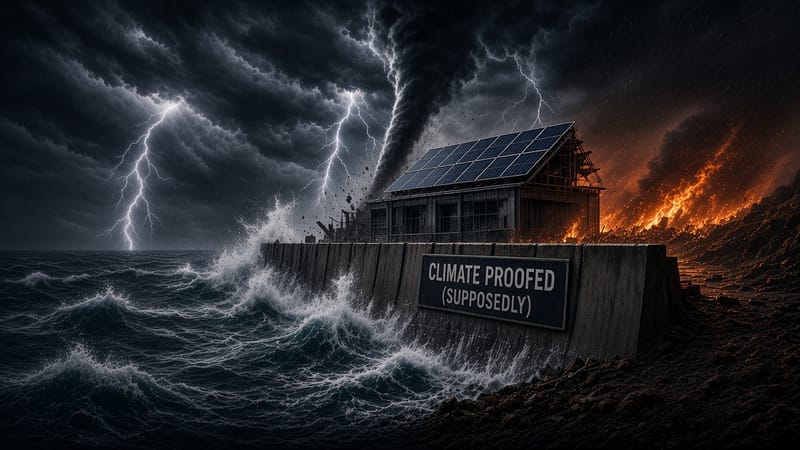
Climate Proofing Was Always a Lie
The implication of a known target, a stable endpoint and durable protection is false. It always was. It didn't take me long to find out who the brains behind one of the most disingenuous concepts in climate adaptation were: a bank.

El Niño Resonance Demands Insurance Adaptation
A Nature Communications study projects ENSO crossing a tipping point by the 2050s, bringing stronger, more erratic El Niño events. What it means for insurers.
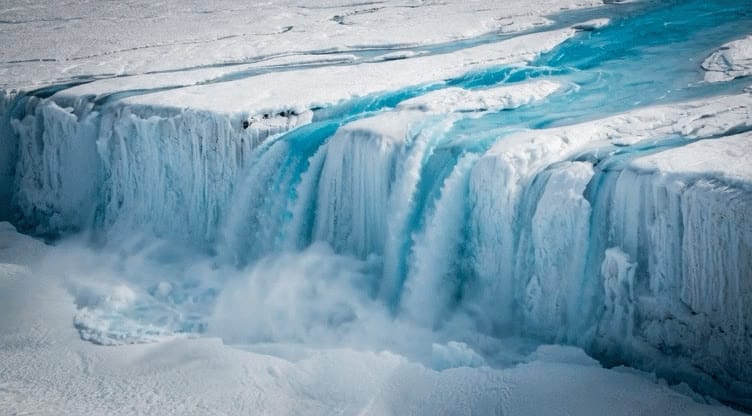
Lessons from Ancient Sea-Level Surges: Reassessing Modern Risks and IPCC Projections
Ancient sea-level surges and new ice-sheet science suggest IPCC projections understate the worst case. Why planners should test assets against 2–3 m by 2100.
Climate change is a security problem. Plan for it like one.
Rising seas, extreme heat and an opening Arctic are already changing where forces are based, how they train and where they deploy. NATO's 2022 Strategic Concept calls climate change "a crisis and threat multiplier". We bring the high-end science into defence, government and critical-infrastructure planning.
A threat multiplier
Drought, crop failure and displacement deepen instability and raise the risk of conflict in regions that are already fragile.
Bases on the coastline
Naval bases, ports and airfields sit at sea level. We test them against high-end sea-level rise and storm surge, not the median.
Readiness in extreme heat
Heat cuts training days, wears out equipment and endangers personnel, long before it damages infrastructure.
The opening Arctic
Retreating ice opens new routes and new competition in the High North, from Greenland to the Barents Sea.
Critical supply lines
Fuel, energy, logistics and materials depend on coasts, rivers and grids that extreme weather can cut.
Rising humanitarian demand
More frequent disasters mean more relief and evacuation missions, drawing on the same forces and budgets.
Built for ministries of defence, armed forces planning staff, security agencies, the defence industry and operators of critical infrastructure.
See the gap between consensus and the high-end case.
Choose an emissions pathway and a planning horizon. The consensus range is what most plans use. The high-end figures are what the same assessment says cannot be ruled out, and they're where we work.
Global mean sea-level rise by 2100
Three vectors. One goal: maximum resilience.
We don't sell "climate-proofing". We tell you what could really happen, what it means for you, and what to do first.
Uncompromised science
The best available research from scientists we've worked with for decades, not diluted by negotiation.
- State-of-the-climate briefings
- High-end & H++ scenario packs
- Board & workforce education
Defend what matters
Climate security for defence, government and critical infrastructure, and hard and soft resilience for every organisation's assets, people and supply chains.
- Climate-security risk assessments
- Installation & infrastructure exposure
- Adaptation pathways & stress tests
- CSRD / ESRS E1 scenario input
Bespoke, proprietary tools
AI-assisted models built in agile sprints, re-run as the science moves.
- Asset-level hazard mapping
- Sea-level & heat-extreme models
- Preparedness dashboards
Eight risk families, filtered from a register of over 190.
- Extreme eventsdamage, disruption, access
- Physical risksdrought, fire, submergence
- Supply chaincoasts, cyclone paths
- Healthheat, CO₂, ecosystems
- Transitioncost, redesign, policy
- Regulatorynew compliance costs
- Reputational & legalactivism, litigation
- Climate migrationworkforce, customers, economies, security
What changes after we talk.
"Upon reviewing the potential impacts of a partial collapse of a single ice sheet on our business assets and operations, we were astonished by the severity of the implications."
"Recognising the disparate impacts of a +2 °C global warming scenario on our workforce across various regions worldwide has compelled us to revise our growth strategy."
"Thank you for educating our workforce about chronic human exposure to CO₂. We were astounded to learn that children experience the effects substantially earlier than adults."
"We are grateful for your insights on high-end scenarios. We feel that we are significantly better prepared now."
In-depth analysis for members.
Some of our analysis is for paying members. Become a member for full access, or sign in if you already are one.
Follow us from Mastodon or any fediverse app.
Every new article is published to the open social web. Search for our handle, follow, and reply. Replies reach us.